
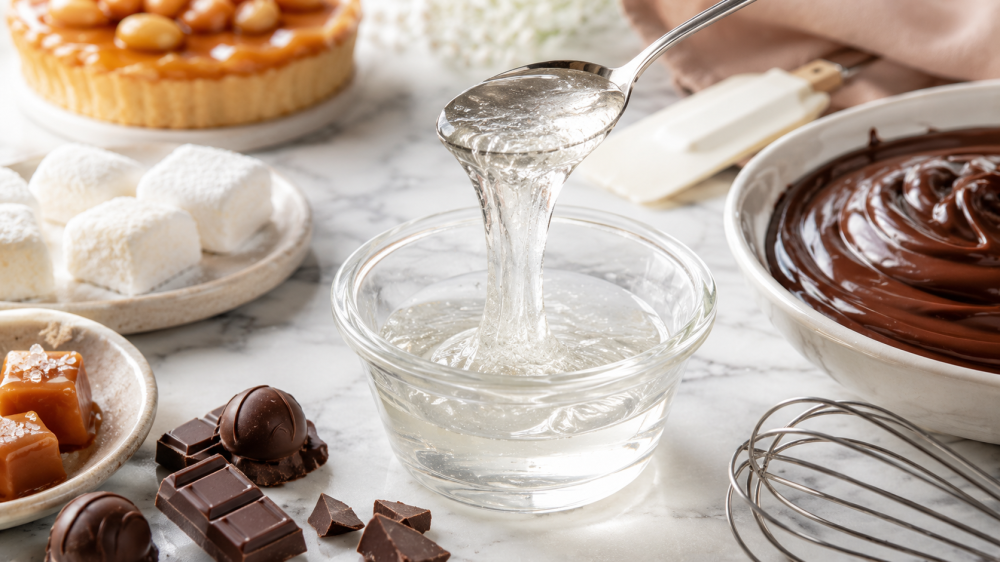
He promises Sweets glucose It is an important raw material in the world of sweets and chocolate, because it helps improve the texture, reduce crystallization, and increase the flexibility of some mixtures. Therefore, bakeries, pastry shops, and productive families depend on it for many recipes that need smoothness, stability, and a better shine.

Although its name may sound technical, its use in recipes is very practical. It is used in the preparation of some types of sauces, caramel, sweets, chocolate, fillings, and marshmallows, and it also helps to give a more professional result when used in the correct quantity.
In this article from Anler, we explain what glucose sugar or glucose syrup is, the difference between it and regular sugar, and how it can be used in sweets and chocolate, with links to suitable glucose products in Anler Store.
What is confectionery glucose?
Confectionery glucose is a thick, relatively transparent syrup used in the confectionery industry to improve texture and control sugar crystallization. In many recipes, the goal is not only to increase sweetness, but also to improve the final structure of the product.
Glucose helps:
- Reducing sugar crystallization in some recipes.
- Gives sauces and caramels a smoother texture.
- Improving the elasticity of some fillings and desserts.
- Adding shine to the chocolate and some coating.
- Increasing the stability of some mixtures during storage.
- Improving the texture of marshmallows and some types of sweets.
For this reason, it is considered one of the practical raw materials for confectionery supplies, especially for projects that need a consistent result from one batch to the next.
What is the difference between glucose and regular sugar?
Regular sugar is used to sweeten and give body in some recipes, while liquid glucose is often used to adjust texture, prevent crystallization, and improve elasticity. So they cannot be considered the same in every recipe.
When preparing caramel or sauces, for example, glucose may help make the texture smoother and less likely to clump or crystallize. In fillings, it may add a looser texture and make the texture easier to spread or use.
This is why it is not recommended to completely replace sugar with glucose without knowing the recipe, because each ingredient has a different role in the final balance.
Uses of glucose in sweets
Confectionery glucose can be used in more than one type of recipe, especially recipes that require a smooth, elastic, or firm texture.
1. Sweets and fillings
Glucose is included in some fillings and sauces because it helps improve texture and reduce clumping. It can be useful in recipes that need a smooth, easy-to-spread texture.
2. Chocolate and coatings
In chocolate and coating recipes, glucose helps improve shine and texture when used in a controlled recipe. If your project is based on chocolate, see also the article Raw chocolate for desserts And an article Uses of chocolate granules.
3. Caramel and sauces
In some caramel recipes, glucose helps reduce sugar crystallization and gives the texture better smoothness. However, you must adhere to the quantity specified in the recipe because increasing it may change the final consistency.
4. Marshmallows and chewy candies
Glucose is used in recipes that require elasticity and stability, such as some marshmallows and chewy candies. In these recipes, it may be combined with other ingredients, such as: Gelatin powder for desserts.
5. Sugar paste and some decorating
Glucose can be used in some decorating recipes that require flexibility, and is also associated with many covering and shaping tasks Sugar paste for decoration.
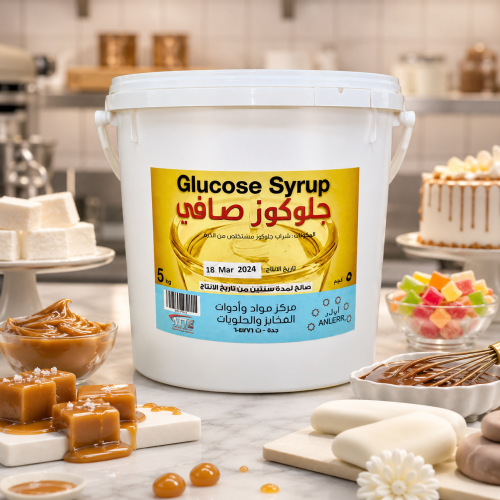
For medium use in bakeries and productive families, it can be chosen Pure liquid glucose 5 kg Because it is suitable for those who need a practical quantity without access to large production packages.
How to use sweets glucose correctly?
The success of glucose in a recipe depends on the quantity, method of addition, and temperature. So don't treat it as a random ingredient, but rather as part of the balance of the recipe.
Stick to the recipe quantity
More glucose does not mean a better result. In some recipes, excess may result in a more viscous consistency than desired or a change in the consistency of the final product.
Add it at the right time
Some recipes require adding glucose with sugar or liquids during heating, and some require adding it at a certain stage of mixing. So follow the recipe method carefully.
Watch the temperature
In caramel and sauce recipes, temperature affects the final consistency. Using glucose does not replace the need for temperature control, it only helps improve the result when the recipe is exact.
Use suitable measuring tools
Because glucose is thick, it is best to use a scale or precise measuring tools. And if you're working on a project, you can organize your tools into... Bakery supplies and cake materials For more consistent results.
Glucose 5 kg or 25 kg: which one is suitable for your project?
The choice of package size depends on the volume of production and frequency of use. Small and medium enterprises often need practical packaging that is easy to store and consume, while bakeries and pastry shops with higher production need larger packages.
- Liquid glucose 1 kg: Suitable for trial or limited use when available.
- Liquid glucose 5 kg: Suitable for productive families and medium-sized projects.
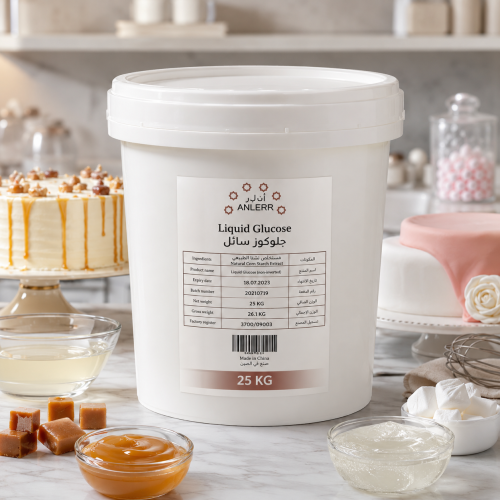
- ANLERR liquid glucose, 25 kg package: Suitable for larger productions, bakeries and pastry shops.
If you are starting your business, do not choose the larger size unless your consumption is continuous, as correct storage is important to maintain the quality of the product.
Common mistakes when using confectionery glucose
Use more than necessary
Excessive amounts may make the consistency sticky or heavier than desired, especially in sauces and fillings. It is best to stick to the recipe ratio and adjust it gradually as you experiment.
Completely replace sugar without modifying the recipe
Glucose is not a direct substitute for sugar in all cases. Substituting it randomly may change the sweetness, texture and consistency.
Store it inappropriately
Exposing the package to moisture or leaving it open may affect the cleanliness and ease of use of the product. Make sure to close the container well after each use.
Not heating it when needed
Because it is thick, it may be easier to handle when slightly warmed according to the recipe, avoiding overheating if the recipe does not call for it.
How to store glucose in sweets
Glucose needs clean, controlled storage in order to maintain its quality. Keep it in a dry place away from high heat and close the package well after use.
Storage Tips:
- Use a clean, dry spoon or tool.
- Close the package immediately after use.
- Keep it away from sunlight and heat.
- Do not mix leftover recipes or wet utensils in it.
- Monitor the expiration date, especially in commercial projects.
When do you need confectionery glucose in your project?
If you are making sauces, caramels, fillings, chocolates, or desserts that need a consistent, smooth texture, having glucose in your ingredients will help you better control the results.
It can also be used alongside other materials such as Whipping cream for desserts, gelatin, chocolate, and sugar paste, depending on the type of product you offer.
For bakeries and productive families, having organized basic raw materials saves time during production and reduces experimentation errors, especially when repeating the same recipe more than once.
Why choose Anler Confectionery Glucose?
Anler provides raw materials and supplies for confectionery and bakeries that help projects prepare their recipes with consistent quality. You can choose the appropriate size of glucose according to your needs, whether a 5 kg or 25 kg package, along with the rest of the sweets, chocolate and decoration supplies.
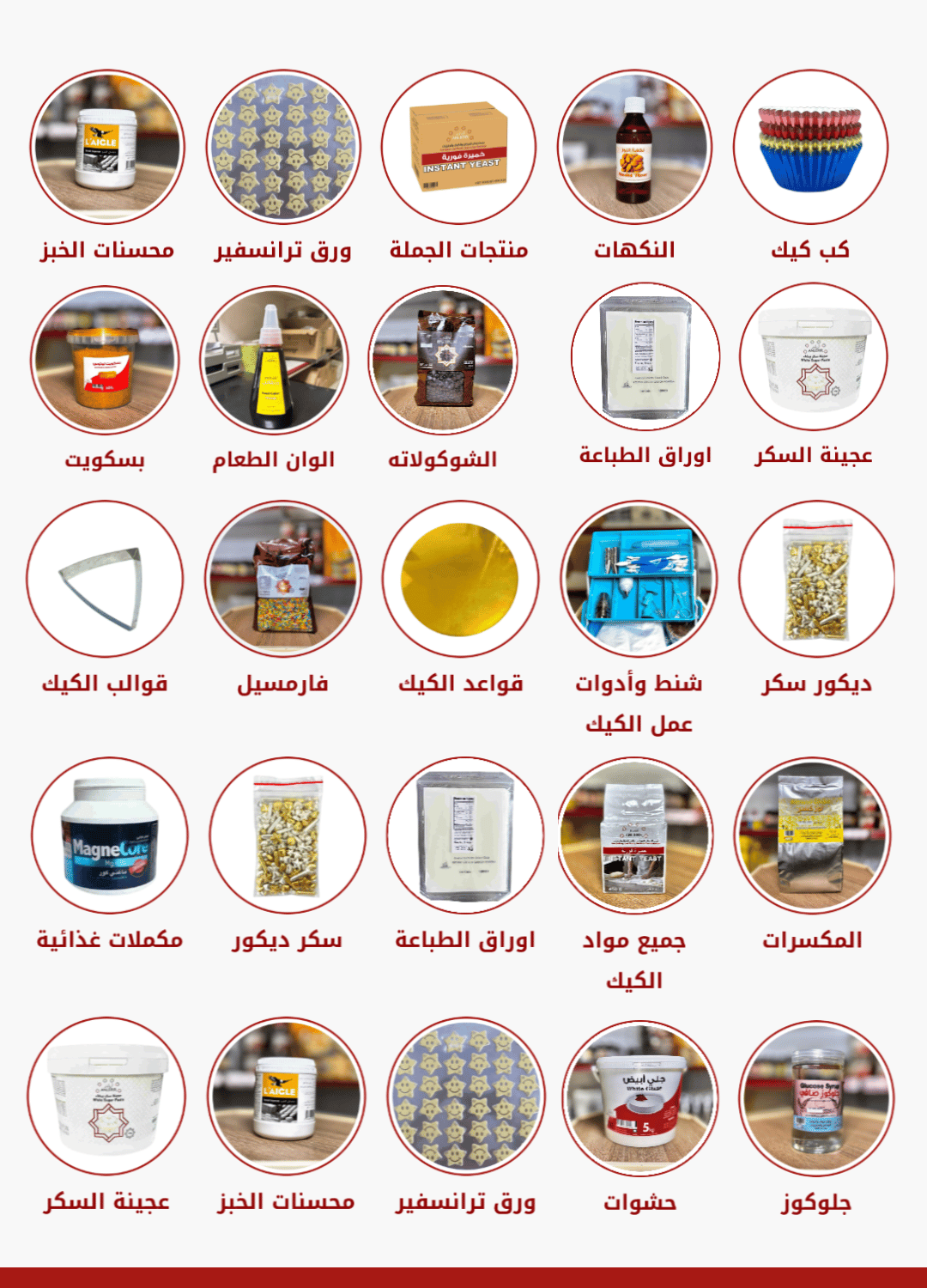
If you want to prepare your project from basic materials to preparation and packaging tools, you can browse Anler Store Choose the products that best suit the nature of your production.
You may also like
- Why do professionals prefer to use raw chocolate in dessert recipes?
- 7 distinctive uses for chocolate chips in cakes, cookies, and desserts
- Powdered gelatin for desserts: how to use it and the difference between it and slices
- Essential bakery supplies to start a successful bakery business

Summary of the article
Confectionery glucose is an important raw material for improving the texture of sweets, chocolate, sauces and caramels, because it helps reduce crystallization and gives some recipes better smoothness and flexibility.
Use it in the correct amount, store it appropriately, and choose the package size according to the size of your production. With careful experience, it can help you deliver more stable and professional products.
And through Anler, you can choose Sweets glucose And other bakery and cake supplies that support your project from preparation to sale.
FAQ
What is confectionery glucose?
It is a thick syrup used in sweets to improve the texture and reduce the crystallization of sugar. It is included in recipes such as caramel, sauces, fillings, and some chocolate recipes.
Is glucose the same as sugar?
No, sugar is mainly used for sweetening, but glucose is often used to improve texture and elasticity and reduce crystallization in some recipes.
Can glucose be used in chocolate?
Yes, it can be included in some chocolate-related coatings and sauces to improve the texture and shine, depending on the recipe method.
What is the best glucose size for projects?
For medium projects, a 5 kg package is suitable, while for larger productions, a 25 kg package can be suitable if consumption is continuous.
How do I store glucose in sweets?
Store in a relatively cool and dry place, close the package well and use clean, dry tools when pulling from it.