
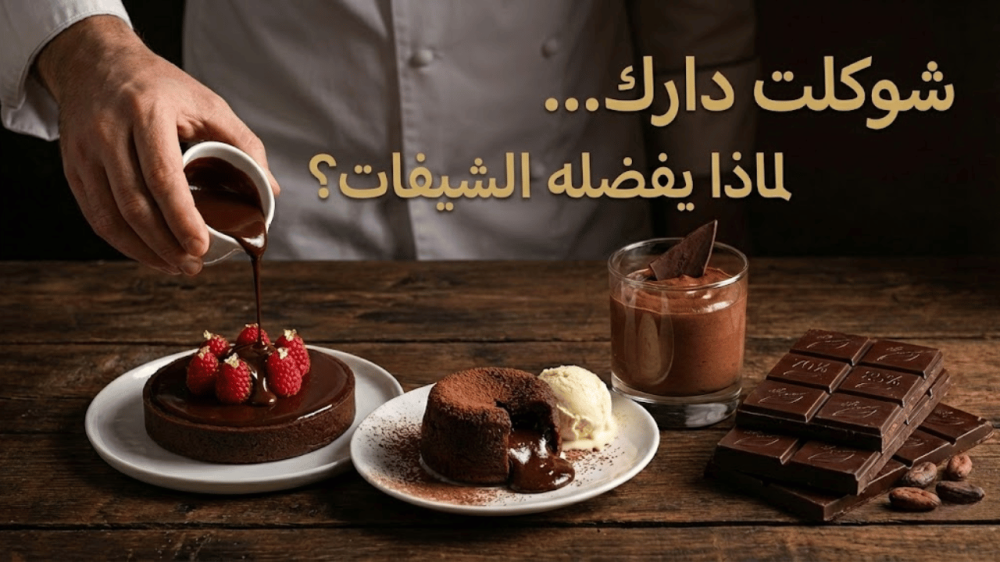
Dark chocolate is considered one of the most favored types of chocolate among professional chefs worldwide. The reason is not just its rich flavor, but also its ability to add an artistic touch to any recipe, whether it’s a luxurious dessert or an innovative dish combining various flavors.
What sets dark chocolate apart is the depth of flavor resulting from its high cocoa concentration, which gives the chef freedom to balance sweetness and bitterness, turning every recipe into a culinary masterpiece.
Section 1: High Cocoa Concentration and Its Effect on Flavor
High-cocoa dark chocolate is the top choice for chefs because it provides a depth of flavor that milk chocolate cannot. It usually contains 70% cocoa or more, resulting in concentrated, rich, and balanced flavors. This intensity allows chefs to control sweetness and bitterness, making every recipe refined and distinctive.
Practical Example: Chefs use dark chocolate in preparing dark brownies, which gives the texture richness and perfect viscosity, adding a depth unmatched by baked goods made with milk chocolate.
Section 2: Flavor Control and Sweetness Balance
Dark chocolate excels at giving any recipe a rich and balanced taste, which makes it beloved by professional chefs. It allows full control over sweetness, so bitterness can be adjusted to taste.
Practical Tips:
- Use a higher cocoa percentage for slightly bitter recipes, and a lower percentage for very sweet ones.
- Combine dark chocolate with nuts or fruits to highlight natural flavors.
- Try recipes like dark chocolate mousse or Belgian chocolate torte to achieve the perfect balance of sweetness and bitterness.
Real Example: In fine-dining pastry restaurants, chefs use dark chocolate to make chocolate truffles, where flavors blend with coffee and nuts to create a luxurious taste experience.
Section 3: Belgian Quality and Its Importance in Cooking
Belgian chocolate is renowned for its high quality and smooth texture, making it the preferred choice of top chefs worldwide. It is characterized by 100% natural ingredients, preserving rich flavor without artificial additives that could affect quality.
Key Points:
- Smooth texture ensures easy melting and control over dessert firmness and sauces.
- Chefs prefer it for making luxury desserts like truffles, tarts, and handmade chocolates.
- Using Belgian chocolate elevates any dish, adding a professional touch.
Real Example: Restaurants like Godiva and Pierre Marcolini rely on Belgian dark chocolate to create premium chocolate recipes, providing consistent and strong flavor.
Section 4: Versatility in Various Recipes
Dark chocolate is highly versatile, as it can be incorporated into cakes, baked goods, mousses, and sauces, delivering balanced and distinctive taste. Chefs value its ability to melt evenly and control texture.
Practical Tips:
- Cut chocolate into small cubes to ensure even melting.
- Mix with a little butter or cream to prepare a rich and smooth sauce.
- Try combining it with dried fruits or nuts to add different flavors and textures.
Real Example: In a dark chocolate cake recipe, using dark chocolate creates a rich, tender cake with a concentrated flavor that persists after baking.
Section 5: Health Benefits of Dark Chocolate
Dark chocolate is considered one of the healthiest types of chocolate when consumed in moderation. It contains antioxidants that help protect the body from free radicals and improve blood circulation. Compared to milk chocolate, it has less sugar, making it a better choice for dessert lovers.
Dark chocolate can be incorporated into healthy recipes like energy bars or light desserts, offering a tasty and nutritious experience simultaneously. Chefs use this property to create balanced recipes that combine flavor and nutritional quality.
Section 6: Enhancing the Chef’s Sensory Experience
Dark chocolate allows chefs to explore taste, texture, and aroma more deeply, giving each recipe a complete sensory touch. Tasting chocolate before use helps precisely adjust bitterness and sweetness, while handling and melting experiments provide full control over the final texture.
Fine-dining pastry restaurants rely on this feature to craft exquisite dishes, making the tasting experience more exciting and enjoyable for all customers.
Section 7: Professional Use in Decoration Arts
Dark chocolate is widely used in decorating cakes and desserts to add an artistic touch. It can be shaped into ribbons or flowers for handmade chocolates and used to make rich sauces for professional dessert plating. Chefs rely on dark chocolate to create visually appealing presentations, whether for special occasions or in fine dining establishments.
This method is one of the most popular ways chefs present desserts while maintaining attention to detail and quality.
Section 8: Compatibility with Other Ingredients
Dark chocolate pairs well with multiple ingredients such as nuts, fruits, coffee, and spices, making it ideal for creating innovative recipes. Chefs can mix it with other components to enhance flavor without losing the chocolate’s original richness.
Experimenting with different ratios of chocolate and additional ingredients allows for unique recipes that suit all tastes. This versatility has made dark chocolate an essential element in modern pastry kitchens.
Suggested Topic: Top Chocolate Products Offered by Anler at the Lowest Prices
Section 9: Dark Chocolate in Gourmet Chocolate
Dark chocolate is the ideal choice for gourmet chocolate making due to its concentrated flavor and high quality. Luxury brands use it to craft truffles and premium desserts, providing an exceptional taste experience.
Professional chefs rely on dark chocolate for complex recipes that require precise control over flavor and texture, making every piece of chocolate a unique experience. Its excellence makes it a staple in the world of fine desserts, reflecting a high level of professionalism in every dish.
Section 10: Practical Tips for Both Chefs and Home Cooks
To select the best dark chocolate for home or professional cooking, ensure the cocoa percentage and ingredient quality are high. Store in a cool, dry place away from humidity and heat to preserve flavor and perfect texture. When mixing into multiple recipes, slow-melting techniques are recommended to control the final consistency.
Dark chocolate can be used in everyday or special recipes, offering rich flavor and flexibility for both amateur and professional chefs.
In conclusion, the importance of dark chocolate for both chefs and home cooks is clear—it is not just chocolate, but a creative tool that gives every recipe depth and flavor richness. From high cocoa concentration to Belgian quality and versatility, dark chocolate offers a unique experience that elevates any dish and makes tasting more enjoyable and professional.
Experimenting with your recipes using dark chocolate adds a professional touch and rich taste, whether making simple home desserts or gourmet chocolate dishes in your professional kitchen.
Don’t wait any longer! Try Anler’s exclusive dark chocolate collection now and enjoy the highest quality chocolate favored by chefs worldwide.
Browse dark chocolate products on Anlerr today.
Frequently Asked Questions (FAQs)
Q1: What’s the difference between dark chocolate and milk chocolate in cooking?
Dark chocolate has a high cocoa concentration, giving depth and balanced bitterness, while milk chocolate is sweeter and milder, which may affect the final recipe balance.
Q2: What is the best cocoa percentage for chefs?
Chefs prefer dark chocolate with 70% cocoa or more, as it provides a concentrated flavor and flexibility to control sweetness and texture in all desserts and baked goods.
Q3: Is dark chocolate suitable for all dessert recipes?
Yes, dark chocolate is suitable for cakes, baked goods, mousses, and sauces, and can also be combined with nuts and fruits to highlight flavors distinctively.
Q4: How should dark chocolate be stored to maintain quality?
Store in a cool, dry place away from humidity, heat, and strong odors to preserve optimal flavor and texture.
Q5: Is there a quality difference between Belgian chocolate and other types?
Yes, Belgian dark chocolate is known for high quality and smooth texture, making it the first choice for chefs in fine desserts and recipes requiring precise control of texture and flavor.
For a deeper understanding of the benefits of dark chocolate and how to use it properly in nutrition and cooking, read the comprehensive article on Healthy Foodz titled: “Everything You Need to Know About Dark Chocolate: Benefits, Uses, and Best Ways to Consume It”, which reviews its nutritional properties and how to incorporate it healthily into your diet.