
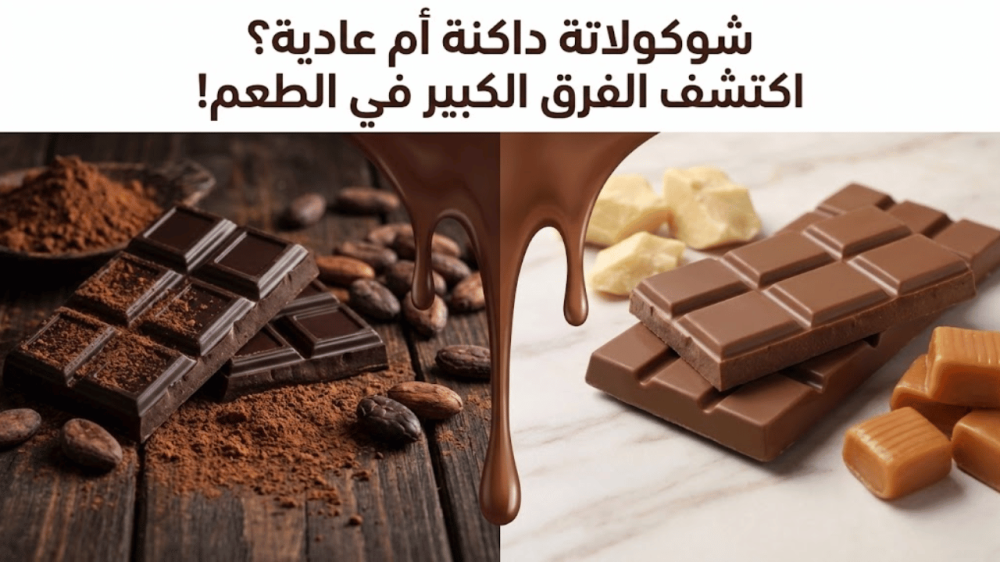
White chocolate is considered one of the most widely used types of chocolate around the world, as chefs and dessert lovers incorporate it into many different recipes. Choosing the right type is not only about taste, but also about health, since some varieties contain higher sugar levels or lower-quality fats. Chocolate always sparks curiosity when it comes to understanding the major differences between dark chocolate and regular chocolate, and how each affects flavor and texture.
Section 1: What Is Dark Chocolate?
Dark chocolate is classified as having a high cocoa content and a low amount of sugar, unlike regular chocolate, which contains higher levels of sweetness. Dark chocolate is made from a simple blend of natural ingredients such as cocoa, cocoa butter, and sugar, giving it a concentrated and rich flavor. A common example is 70% cocoa chocolate, which offers an excellent balance between bitterness and sweetness, making it suitable for both cooking and refined tasting experiences.
Section 2: Cocoa Percentage and Why It Matters
The cocoa percentage plays a key role in determining the taste and nutritional value of dark chocolate. The higher the cocoa content, the more bitterness and the less sweetness it has, while its health benefits increase due to the abundance of antioxidants in cocoa. Choosing chocolate with the right cocoa percentage allows you to achieve the desired flavor without sacrificing quality, and it forms the foundation of recipes that require a rich and balanced taste.
Section 3: Flavor and Texture – Dark Chocolate vs. Regular Chocolate
Regular chocolate is known for its sweet flavor and light texture that melts quickly in the mouth, making it ideal for children and for those who prefer a mild taste. On the other hand, dark chocolate offers a rich and complex experience thanks to its density and subtle bitterness, making it a preferred choice for hot drinks and flavor-rich cakes. Tasting both types helps you determine the most suitable option based on your recipes and personal preferences, as each type adds a distinct flavor and texture to any dish.
Section 4: Health Benefits of Dark Chocolate
Dark chocolate contains powerful antioxidants that contribute to improved heart and cardiovascular health and better blood circulation. Studies have also shown that consuming dark chocolate can enhance concentration and boost mental energy, making it a healthier option compared to regular chocolate. Incorporating dark chocolate into your recipes not only provides a unique taste but also adds real nutritional benefits that enhance the quality of your daily meals.
Section 5: Pros and Cons of Regular Chocolate
Regular chocolate stands out for its sweet taste that appeals easily to both children and adults, making it an excellent choice for light and quick recipes. However, it often contains higher levels of sugar and fats, which may affect the nutritional value of a dish. Choosing regular chocolate depends on its intended use—whether for a simple cake or everyday desserts—while balancing taste with health considerations during preparation.
Section 6: Psychological Impact and Personal Preference
People usually choose chocolate based on personal taste and past experiences. Those who seek deep, rich flavors tend to prefer dark chocolate, while lovers of simple sweetness are drawn to regular chocolate. A brief tasting experience of both types can help determine your favorite, noting that mood or occasion may influence your choice from one type to another.
Section 7: Best Ways to Buy Dark Chocolate
When purchasing dark chocolate, it is recommended to rely on specialty stores or trusted brands that guarantee ingredient quality. Online shopping offers a wide range of options, but it is essential to verify the product source and actual cocoa percentage. Trying 70% cocoa chocolate from a reliable store gives you the chance to enjoy rich chocolate without compromising taste or quality.
Suggested Related Topic:
Innovative Chocolate Molds: Creative Ideas for Serving Luxury Desserts at Home
Section 8: Using Chocolate in Different Recipes
Dark chocolate can be incorporated into desserts and beverages in creative ways. It is commonly used in cakes and brownies to add a rich flavor, and it can also be added to hot drinks for a warm, luxurious taste. White chocolate can be used for decorating various recipes, such as French pastries or elegant chocolate molds, giving each dish a refined appearance and a balanced flavor.
Section 9: Dark Chocolate as a Gift or a Special Touch
Dark chocolate is a sophisticated choice for gifts and special occasions, reflecting attention to detail and quality. It can be elegantly packaged for family gatherings or hospitality settings, adding a luxurious touch to any table. Gifts made with dark chocolate are also a way to express refined taste and care in offering something special to guests.
Section 10: Tips for Storing Chocolate and Preserving Flavor
To maintain the quality of dark chocolate, it should be stored in a cool, dry place away from humidity and direct light. The ideal temperature helps preserve texture and flavor and prevents sugar bloom on the surface. Each type of chocolate has an optimal shelf life depending on its cocoa percentage and ingredients, so it is important to check production dates and choose fresh products to ensure the best experience.
Conclusion
In conclusion, the difference between dark chocolate and regular chocolate is clear in terms of taste, texture, and health benefits. Trying both types helps you choose the one that best suits your preferences and the recipe you are preparing. Understanding the characteristics of each type and using them correctly adds value to cooking and entertaining, making every recipe more delicious and elegant—whether you prefer white chocolate for decoration or dark chocolate for its rich flavor.
To enjoy the best chocolate varieties and experiment with innovative recipes, you can visit Anlerr Store to select high-quality products with fast delivery for all your cooking and dessert needs. Try it today and add delicious, distinctive touches to your recipes!
Frequently Asked Questions (FAQs)
1. What is the difference between dark chocolate and regular chocolate in terms of taste?
Dark chocolate is rich in cocoa with a slightly bitter and dense flavor, while regular chocolate is sweeter and lighter, making it suitable for children and those who prefer simple sweet flavors.
2. Is dark chocolate healthier?
Yes, dark chocolate contains more antioxidants compared to regular chocolate, which supports heart health and improves focus and energy—especially when choosing higher cocoa percentages such as 70%.
3. What is the ideal cocoa percentage for dark chocolate?
The ideal cocoa percentage ranges between 60% and 70%, providing an excellent balance between bitterness and sweetness along with better health benefits. It is suitable for most recipes and desserts.
4. Why does white chocolate melt quickly?
White chocolate melts quickly because it contains a high percentage of cocoa butter and fewer solid components, making it sensitive to heat and humidity.
5. Is white chocolate healthy?
White chocolate contains fewer antioxidants compared to dark chocolate, but it provides calories and pleasant flavor and can be enjoyed in moderation as part of a balanced diet.
6. Can white chocolate be used in savory desserts?
Yes, white chocolate can be combined with savory ingredients such as nuts or cheese in certain recipes to add a smooth, sweet touch without overpowering the overall flavor.
If you would like to learn more about the real health benefits of dark chocolate and its overall impact on the body, you can refer to the Arabic CNN website, which published a comprehensive report explaining how dark chocolate can contribute to improved health. This includes its effects on cognitive functions, heart health, reducing inflammation, and other scientifically proven benefits. CNN Arabic is considered one of the strongest and most reliable sources in search engine results and online platforms