
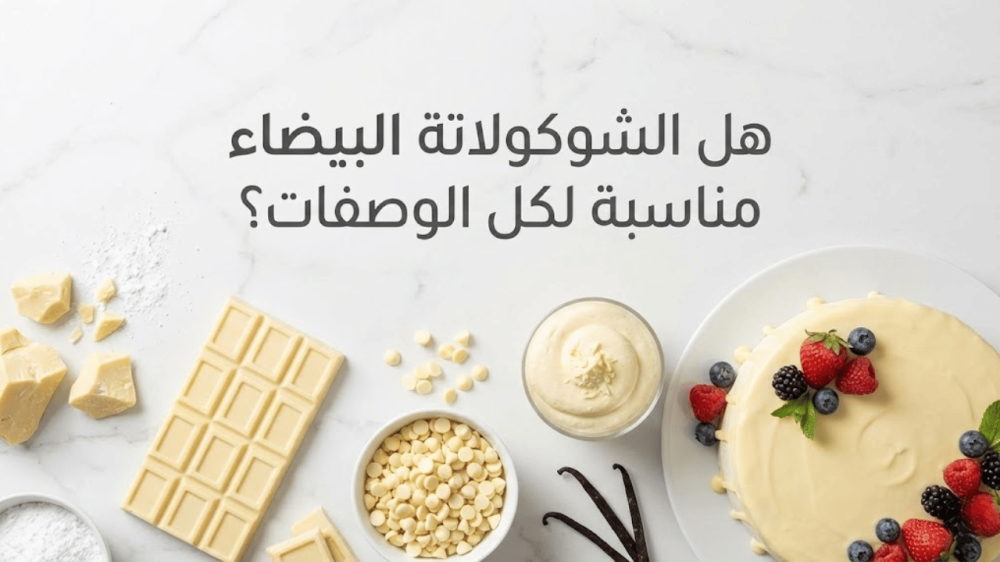
White chocolate is a popular choice in the world of desserts and baked goods, as it adds sweetness and a rich, creamy texture. However, it differs from dark or regular chocolate in both ingredients and flavor. Despite its popularity, it is not always suitable for every recipe, as it may affect flavor balance and reduce the deep cocoa taste found in other types of chocolate.
Section 1: What Is White Chocolate?
White chocolate is made from cocoa butter, sugar, and milk powder, and it does not contain cocoa solids found in dark chocolate. This makes it less bitter and sweeter in taste. Its composition gives it a creamy texture and smooth consistency, making it easy to incorporate into various dessert recipes. White chocolate is available in many well-known global varieties, such as French and Japanese brands, and is mainly used for decoration and for making mousses and creams. This makes it an ideal choice for lovers of soft desserts and elegant presentation.
Section 2: The Advantages of White Chocolate in Desserts
White chocolate stands out for its rich flavor and creamy sweetness, which set it apart from other types of chocolate and add a luxurious touch to desserts. In addition, its smooth and flexible texture when melted makes it ideal for preparing cream-based mousses, chocolate drizzles, or creamy layers on cakes and brownies. For example, many chefs use it to decorate birthday cakes, as its attractive white color gives desserts an elegant look that draws attention and enhances visual appeal.
Section 3: When White Chocolate Works Best
White chocolate is ideal for recipes that require a clearly creamy and smooth texture, such as creams, fondants, and cold desserts like mousse and gelato. It melts easily and blends well with other ingredients without overpowering their flavors. It is also used in high-end French pastries to add a refined, luxurious character to recipes. Using a comparison table to highlight suitable versus unsuitable recipes can help both chefs and beginners achieve perfect results without random experimentation.
Section 4: When White Chocolate Is Not Suitable
White chocolate is not recommended for baking or cake recipes that include strong flavors such as coffee or dark chocolate, as the flavors may clash and the unique creamy taste of white chocolate may be lost. Likewise, recipes that rely on acidic or bitter ingredients can negatively affect the final texture and result in an unbalanced flavor. To avoid recipe failure, it is always advised to carefully balance ingredients and choose the appropriate type of chocolate for each recipe, while testing a small quantity before full execution.
Section 5: Choosing the Right Type of White Chocolate
Selecting the right type of white chocolate can make a significant difference in the success of a recipe. There are varieties designed specifically for decoration and others for cooking or baking, and distinguishing between them is essential to avoid disappointing results. For instance, high-quality white chocolate bars provide a smooth texture and rich flavor, while low-quality options may lead to clumping or flavor loss. By reading product ingredients and checking the cocoa butter percentage, both beginners and professionals can easily choose the ideal type for each recipe with confidence and precision.
Suggested Related Topic:
Belgian Chocolate Discs | The Secret of Luxury in the World of Desserts
Section 6: Proper Ways to Melt White Chocolate
To achieve a smooth texture when melting white chocolate, it is important to follow the correct techniques. A double boiler can be used to prevent burning, or a microwave with continuous stirring. Common mistakes include:
· Overheating, which causes the chocolate to seize.
· Adding cold ingredients before the chocolate is fully melted.
· Failing to chop the chocolate into small pieces before heating.
Following these tips ensures smooth, ideal results for cooking and decorating, and highlights the clear difference between white chocolate and dark chocolate in terms of texture and flavor.
Section 7: Combining White Chocolate with Other Flavors
White chocolate is highly versatile and can be easily combined with a wide range of flavors, including fruits, nuts, and mild spices. Key tips for successful pairing include:
· Adding fresh fruits such as berries or strawberries for a refreshing taste.
· Using nuts like almonds or hazelnuts to create a crunchy texture.
· Blending with a small amount of dark chocolate to balance sweetness and bitterness.
This approach allows for creative recipes such as white chocolate strawberry mousse or elegant cake decorations without excessive sweetness.
Section 8: Online Methods for Using White Chocolate
The internet offers excellent resources for learning how to use white chocolate professionally, including:
· Following specialized cooking blogs or YouTube channels for precise recipes.
· Searching for authentic French chocolate or high-quality white chocolate bars.
· Joining digital cooking communities to exchange ideas and innovative recipes.
These methods help improve skills and achieve excellent results without trial and error, while enabling creative combinations of white and dark chocolate in complex desserts.
Section 9: Offline Methods for Using White Chocolate
Hands-on experience plays a major role in mastering white chocolate techniques. This can be achieved by:
· Learning from a local chef or attending practical dessert courses.
· Experimenting with homemade recipes to practice melting and decorating techniques.
· Participating in in-person workshops to exchange experiences with other chefs.
Through these methods, both beginners and professionals can refine their skills and gain a deeper understanding of the differences between white and dark chocolate.
Section 10: Common Mistakes When Using White Chocolate and How to Avoid Them
To avoid recipe failure, it is important to watch out for the most common mistakes:
· Overheating or adding acidic ingredients before proper melting.
· Using low-quality chocolate that affects flavor and texture.
· Not chopping the chocolate before melting or stirring inadequately.
These issues can be corrected by gently remelting at low heat or adding a small amount of butter to restore smoothness, ensuring excellent results and a rich flavor that rivals dark chocolate in complexity.
Conclusion
After reviewing the differences between white chocolate and dark chocolate, it becomes clear that each type has its own advantages and ideal uses. White chocolate provides sweetness and a creamy texture perfect for decoration and cold desserts, while dark chocolate stands out with its rich flavors and health-related bitterness. Choosing the right type depends on the recipe and personal preference, and experimenting with a combination of both can lead to innovative and distinctive results.
To explore premium chocolate varieties and discover creative recipes, you can visit Anlerr Store, where you’ll find a wide selection of high-quality chocolates, professional cooking tips, and easy-to-follow recipes to try at home. Don’t hesitate to experiment with flavor combinations for a refined tasting experience that blends both white and dark chocolate.
Frequently Asked Questions (FAQs)
1. What is the difference between white chocolate and dark chocolate?
· White chocolate contains cocoa butter, sugar, and milk, without cocoa solids.
· Dark chocolate contains a high percentage of cocoa (usually 60–85%), giving it a rich flavor, slight bitterness, and additional health benefits.
2. Is white chocolate healthier than dark chocolate?
· Dark chocolate is generally healthier due to antioxidants found in cocoa.
· White chocolate provides energy and sweetness but contains more sugar, so it should be consumed in moderation.
3. What is the best cocoa percentage for dark chocolate?
· For rich flavor and health benefits, it is recommended to choose chocolate with 70% cocoa or higher.
· Higher percentages offer deeper bitterness and less sweetness compared to white chocolate.
4. How do I choose the best white chocolate for cooking or decoration?
· Always read the ingredients: it should contain high-quality cocoa butter and balanced sugar.
· Some types are made specifically for decoration and others for cooking—choose according to your recipe.
5. Can white chocolate be combined with dark chocolate in one recipe?
· Yes, combining both types creates a balance between sweetness and bitterness and adds depth of flavor.
· White chocolate can be used for decoration, while dark chocolate works well for bases or fillings.
You can also expand your knowledge about the benefits and types of chocolate by reading the comprehensive article on the Mawdoo3 website, which provides detailed insights into nutritional value, health effects, and expert recommendations—especially comparisons between white chocolate and cocoa-rich dark chocolate.