
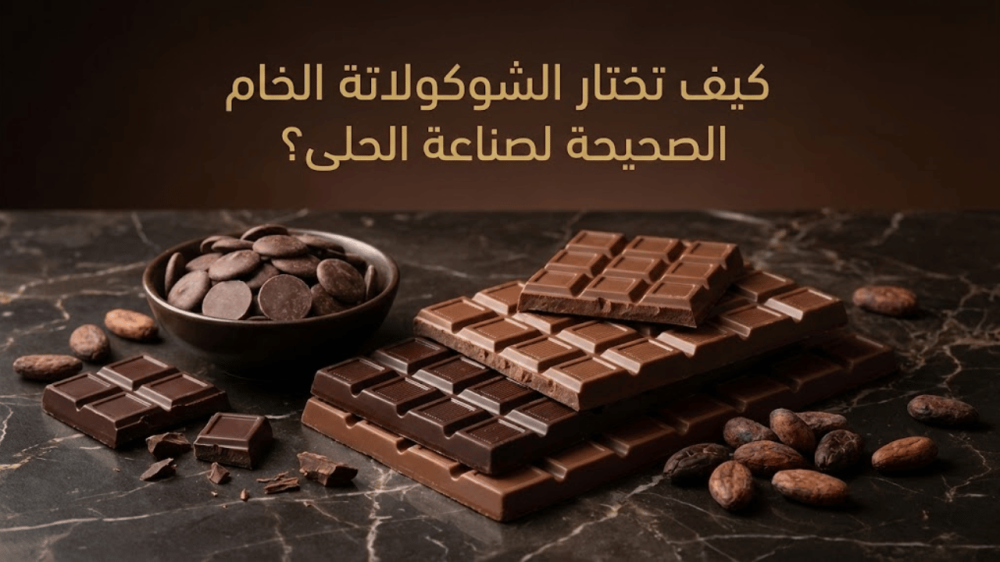
Choosing high-quality raw chocolate is a crucial step to achieve perfect desserts. The quality directly affects the texture, taste, and final appearance of any dessert.
- Raw chocolate provides a rich flavor experience and highlights the natural taste of cocoa.
- It helps achieve a smooth and uniform texture, making shaping and decorating easier.
- Cooking chocolate types vary according to cocoa content, such as 55% raw chocolate or premium Belgian chocolate, allowing you to select the right type for each recipe.
Section 1: Choosing the Right Cocoa Percentage
The cocoa percentage is the main factor that determines the taste and texture of raw chocolate in desserts. Flavors differ noticeably between 55%, 70%, and 85%, where 55% offers a balanced taste suitable for mousse and truffles, while higher percentages give a more bitter and rich cocoa flavor.
- 55% Raw Chocolate: Smooth and balanced flavor, ideal for beginner and premium desserts.
- 70% and 85%: High cocoa concentration, perfect for luxurious desserts like dark chocolate or rich chocolate mousse.
- Choosing the right percentage helps control dessert texture and ensures easy melting and shaping.
Section 2: Checking the Chocolate Source
The source of raw chocolate determines its quality and final flavor. Belgian chocolate is known for its rich taste and perfect texture, while local chocolate provides varied options at a lower price.
- When looking for a supplier, check reviews and certifications to ensure quality.
- Trying reliable suppliers yields better results in taste and final texture.
- Local suppliers can provide fresh chocolate while supporting local businesses.
Section 3: Reading Chocolate Ingredients
Understanding the ingredients ensures you choose pure and healthy raw chocolate. Key ingredients include cocoa, cocoa butter, and sugar, while preservatives and artificial oils that reduce flavor quality should be avoided.
- Check the cooking chocolate label for cocoa percentage and ingredient quality.
- Only natural ingredients indicate high quality and better performance when melting and shaping.
- High-quality chocolate gives desserts a smooth texture and rich, balanced taste.
Section 4: Tasting Before Buying
Tasting raw chocolate before committing is a crucial step to avoid dessert failures.
- Use your senses: smell, texture, and melt-in-mouth feeling provide a clear idea of quality.
- Try small samples and compare different types to find the most suitable for your recipe.
- Practical example: comparing cooking chocolate from the same supplier to notice differences in taste and texture before buying a large quantity.
Section 5: Proper Storage of Raw Chocolate
Proper storage preserves chocolate flavor and texture.
- Ideal temperature: 15–20°C (59–68°F), with low humidity to prevent odor absorption or crystallization.
- Keep away from light and high heat, preferably in airtight containers.
- Example: storing Belgian chocolate in a sealed container away from the fridge maintains its smooth texture.
Section 6: Using Belgian vs. Local Chocolate
Choosing between Belgian and local chocolate depends on budget and desired flavor. Belgian chocolate offers higher quality and richer taste, while local chocolate is an economical choice for homemade desserts.
- Comparing quality, taste, and cost helps make the right decision.
- Luxury desserts often achieve the best results with Belgian chocolate, while everyday desserts can rely on local chocolate.
- Example: luxurious brownies using Belgian chocolate versus a simple homemade version.
Suggested Topic: Chocolate Secrets: What Makes It a Favorite Among Dessert Professionals?
Section 7: Proper Ways to Melt Chocolate
Properly melting raw chocolate ensures smooth texture and rich flavor.
- Methods include using a double boiler or microwave at low temperature to avoid burning.
- Continuous stirring prevents clumping and maintains smooth texture.
- Practical example: melting 55% raw chocolate for mousse or cake decoration smoothly and attractively.
Section 8: Combining with Other Ingredients
Choosing complementary ingredients enhances the flavor of raw chocolate and adds variety to desserts.
- Nuts, dried fruits, and cream create a balanced flavor combination.
- Balancing ingredients prevents one flavor from overpowering others.
- Example: adding dried fruits to Belgian chocolate to make rich-flavored and textured brownies.
Section 9: Evaluating Quality After Use
After using raw chocolate, evaluating its performance ensures satisfactory results.
- Texture, final consistency, and sweetness help determine chocolate quality.
- Comparing results between different types helps choose the best one for future tasks.
- Example: testing chocolate mousse after melting to observe differences between types.
Section 10: Professional Tips for Buying Raw Chocolate
Following smart purchasing steps ensures high quality and reasonable price.
- Buy appropriate quantities to avoid long storage that affects flavor.
- Look for reliable suppliers for the best deals and quality.
- Balancing price and quality guarantees an ideal experience when making desserts with raw chocolate.
Choosing the right raw chocolate is the secret to a perfect and successful dessert. It affects taste, texture, and the final appearance. By following the tips on selecting cocoa percentage, checking the source, and proper melting and storage methods, you can achieve the best results easily.
- Try combining natural ingredients with raw chocolate to add a personal touch to your desserts.
- Always evaluate quality after use to improve your dessert-making skills.
Discover our wide range of high-quality raw chocolates at Anlerr store and start your journey to making luxurious desserts today!
Frequently Asked Questions (FAQs):
- What is the difference between raw chocolate and regular cooking chocolate?
- Raw chocolate contains natural ingredients with higher cocoa percentages, while cooking chocolate may include additives or oils for easier processing.
- Does cocoa percentage affect melting?
- Yes, chocolate with high cocoa content melts slower and requires better temperature control.
- How do I know if raw chocolate is fresh and high-quality?
- By texture, aroma, and glossy appearance without any white crystals.
- Is Belgian chocolate worth the price difference?
- Usually provides richer flavor and smoother texture but at a higher cost.
- Why doesn’t chocolate melt easily?
- Often due to high cocoa content or incorrect temperature control during melting.
- How can I differentiate between raw and regular chocolate?
- Raw chocolate usually contains only cocoa and cocoa butter without artificial additives, whereas regular chocolate may include vegetable oils or artificial flavors.
For a detailed guide on choosing chocolate for baking and cooking, including tips on different types and how to use them in dessert recipes, visit Allrecipes: Choosing the Right Chocolate for Baking and Cooking – Allrecipes.